A menopause and HRT diary that puts your therapy next to your hot flashes, sleep and heart data. After every dose change, you see what actually changed.
Three moments, and the app is designed for exactly those three. Nothing happens between them that you have to maintain.
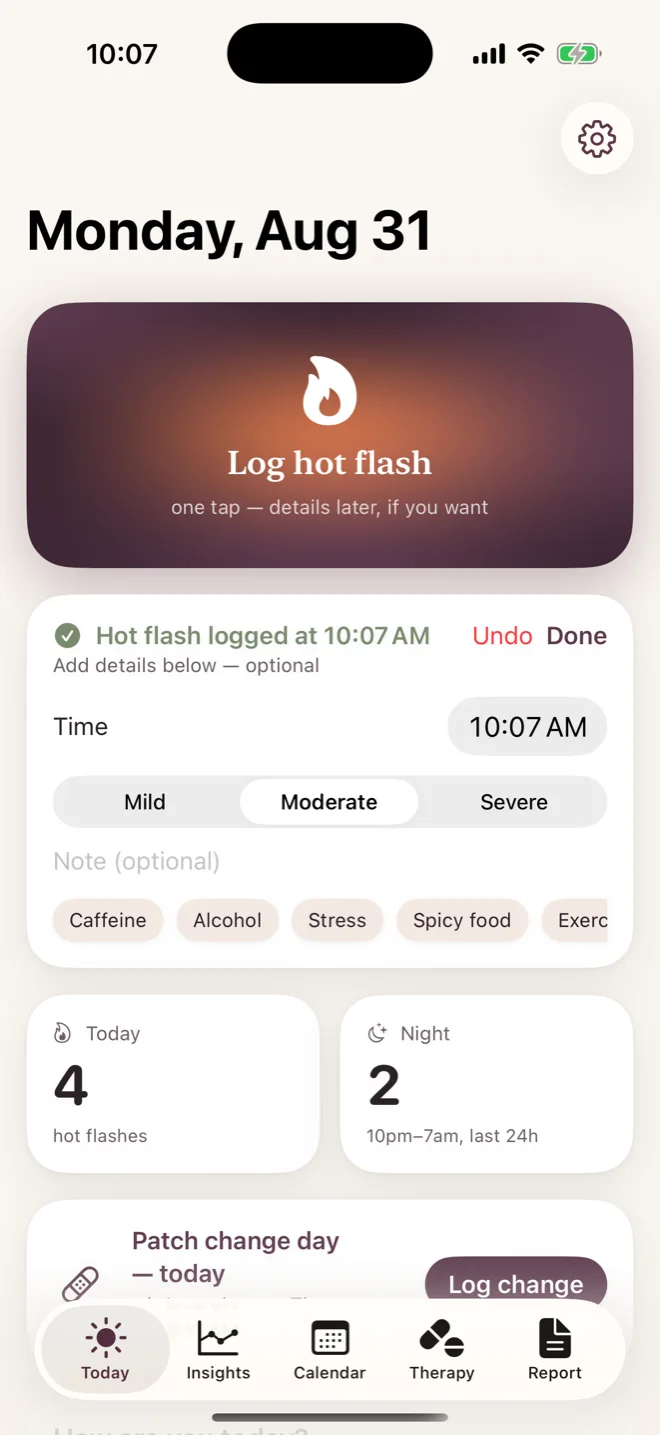
Hot flash? Tap once on your iPhone or Apple Watch — logged with the exact time. Night episodes count separately. Details are optional, and you can add them later or never.

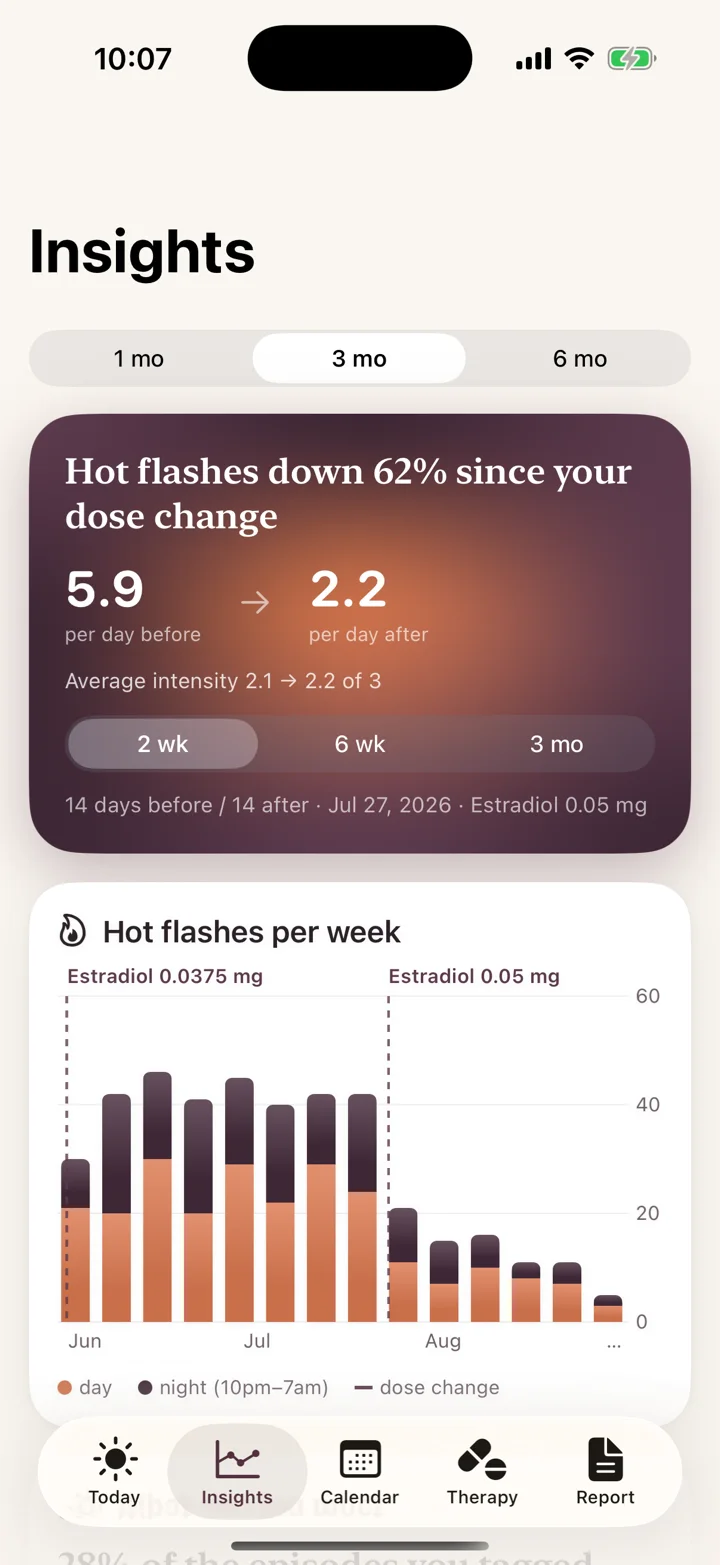
Every dose change becomes a line on your charts. Attune compares the real days of data either side of it — and says so plainly when the window is still too short to mean much.

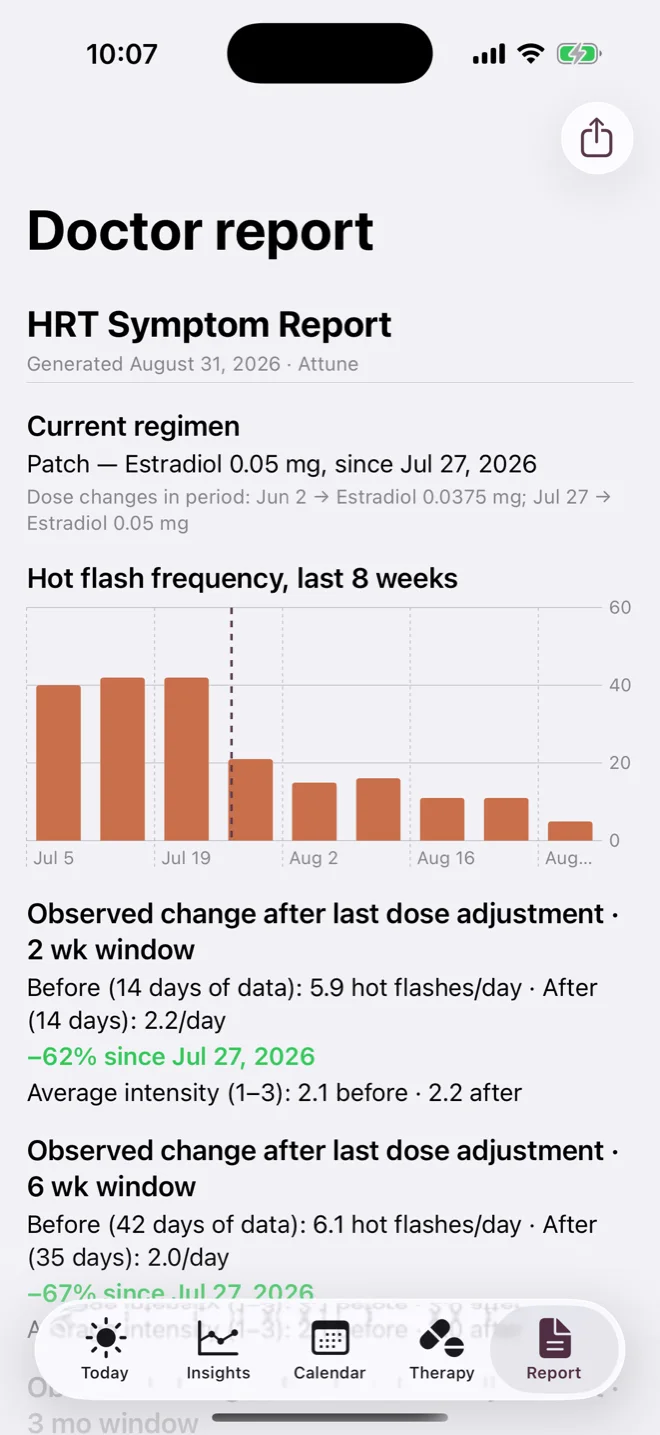
A clear summary for the appointment: frequency trends, sleep, the observed change after your last adjustment, and the questions you wrote down at 2 a.m. and would have forgotten.

“The first app that actually shows whether my hot flashes go down after a dose change. Logging takes seconds, and it waits for real data before showing insights. Calm and genuinely useful.”
Not features for their own sake. Each one exists because a note in your phone fails at exactly that point.
Hot flashes, symptoms, sleep, resting heart rate and HRV — each drawn with a marker where the dose changed. The point is not the chart; it is that you never have to remember when the change was.

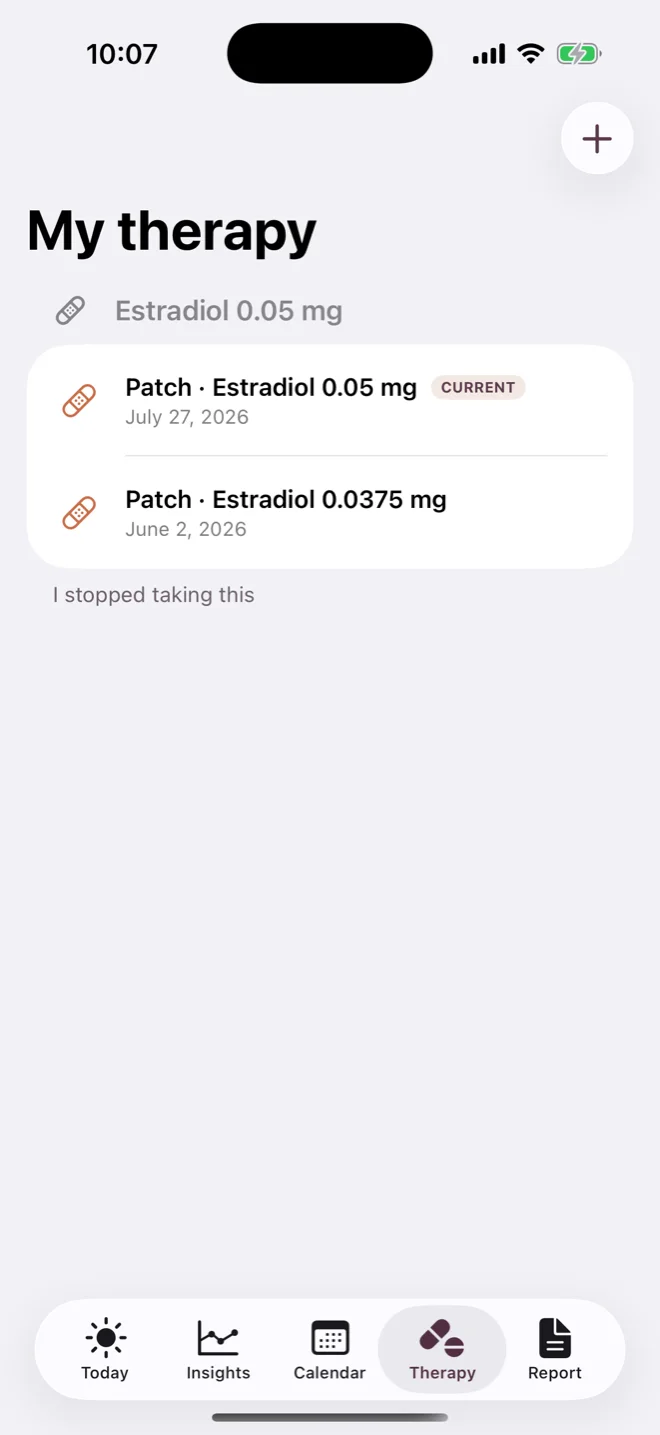
Estradiol patch plus micronised progesterone? Each medication gets its own schedule, its own reminders, and its own adherence record. Perimenopause or post-menopause, with a cycle or without one.

These four are free, work in the browser, need no email, and send nothing anywhere. If they are all you ever need, that is a perfectly good outcome.
Section by section, the actual summary Attune produces for an appointment — and the five things it deliberately refuses to claim.
See the report →One page, seven days: day and night episodes, how much each day got in the way, your dose. Print it or save it as a PDF.
Open the diary →Counted before a dose change and after it? Two stretches of different lengths are not comparable until both become a daily rate. This does that.
Open the calculator →The part nobody explains: what counts as one episode, when to mark it, and why a missed day must never be written as a zero.
Read it →Your diary is never sent to us. It is stored on your iPhone, and — like everything else on the device — it may be included in your iPhone backup. We run no servers for it and there is no account to attach it to; that is how the app is built, not a promise. The app does send a small set of anonymous usage events, such as which screens were opened. Never what you wrote. They are listed in the privacy policy.
$49.99 a year or $5.99 a month, with a 7-day free trial for new subscribers first — so you see your own pattern before you pay anything. Cancel any time from your Apple subscriptions, in one tap.
No. Everything can be logged on the iPhone with one tap. The Watch removes the step of finding your phone, and brings sleep and heart-rate trends in automatically.
No. Attune records what you log and what Apple Health measures, and reports the change it observed. Whether a dose is right for you, and what to do next, belongs to you and your clinician — Attune only makes that conversation concrete.
Yes. Cycle tracking is optional throughout, and bleeding is a field you can leave switched off. The dose comparison does not depend on a cycle existing.
One developer, AlmazNurmukhametov, working on it alone. That is why there is no support desk and no sign-up — and why an email to almazic91@gmail.com arrives with the person who can actually change the app.
Missing a day is information, not a failure. Nothing in Attune congratulates you or guilts you.
Thin data gets labelled preliminary. Missing Health readings print as n/a, never as zero.
Logging stays one tap in month twelve. The charts get more useful, not more crowded.
Seven days free — long enough to see your own pattern before you pay a thing.
then $5.99/month or $49.99/year · free trial for new subscribers · your entries stay on your iPhone